Product Re-design, Vision Type, Team Collaboration
End-to-end system mapping before a single screen is drawn — APIs, org dependencies, and user journeys treated as one model.
6-milestone delivery plans. Decoupled backend dependencies. 2 months saved at AWS. Designers shipping MUI directly at Venafi.
Trust design, agentic workflow patterns, and transparency at scale — for AI products that earn confidence before they ask for it.
Customer panels replacing roadmap opinions. 12K tickets synthesized into priorities. VP-level alignment without losing the user.
30K → 275K console visitors. 58K dev hours saved on a single pivot. 0 → 300 SaaS customers. 66% friction reduction across 18 workflows. The work shows up in numbers.
Unique console visitors at AWS ECS. Was 30K at project start.
Dev hours saved by decoupling one roadmap dependency.
Enterprise customers on Venafi SaaS — launched from zero.
Console friction reduced across 18 workflows, 110 parity items.
“Ruchita ran viewing parties so our VPs could watch real users struggle. That one session did more for roadmap alignment than six months of decks.”
“She synthesized 12K customer tickets into a prioritized roadmap the entire leadership team aligned on. In one session. That’s not a designer skill — that’s executive leadership.”
Every engagement starts with a system audit — not a wireframe. I map what exists, where it breaks, and what business outcome the design must move. At AWS I produced end-to-end journey maps for 18 workflows and 110 parity items before a single new screen was proposed. The framing is the work.
I run customer panels, synthesize support tickets at scale, and host user testing viewing parties with leadership — so roadmap decisions are grounded in real behaviour, not internal assumptions. At AWS I synthesized ~12K tickets and distilled 25 customer interviews to drive 7 UX-led asks into OP1. Data doesn’t just inform the design. It wins the room.
I scope releases in milestones that ship real value and let the org learn in production. At AWS I defined 6 delivery milestones saving ~2 months of schedule under 90% team attrition. At Venafi I structured a Figma→MUI pipeline so designers shipped production components directly. Shipping frugally is not a constraint. It’s a strategy.
The most leveraged design work happens at the API layer — not the UI layer. At AWS I visualized 10+ API touchpoints to influence 2 CloudFormation templates, enabling single-click workflows engineering had previously said were impossible. At Docker I brought FE and BE teams into hi-fi reviews early to model cost tradeoffs before commitments were made.
Misalignment kills products before bad design does. I use journey maps, vision artifacts, and workshop facilitation to create a single shared model across PM, engineering, and leadership. At Docker I reduced 10 competing PRDs to 5 prioritised initiatives in a single quarter through structured empathy mapping. Alignment is a design deliverable.
Driving engagement for Docker platform
Storytelling | Product Design
Team size: 3 designers, 6 product managers
My role: Product Designer
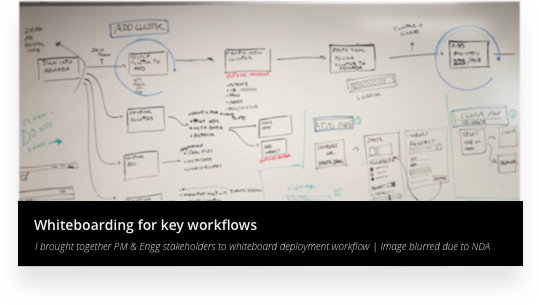
P.S. - Images are blurred due to NDA clauses
Skills learned: Creating vision type, Storytelling, Project planning, business design
We wanted to drive user engagement on the platform and make the platform more engaging as the users deploy applications across multiple clusters (cluster federation) in their data centers.
Created a completely new product line to drive user engagement and growth.
💰Increased bookings for the platform, numbers exceeded expectations.
💰Better renewal rates.
In order to achieve a business goal, I was part of a 3 person design team. Our goal was to craft the vision for next generation Docker platform.
As a part of this project, we were working with 3 teams spread out geographically. These teams had a total of ~10 product requirement documents (PRDs) that we wanted to streamline in order to deliver a cohesive experience through the platform. To put some structure to this big group, I put in place a high-level plan consisting of loosely defined sprint cycles.
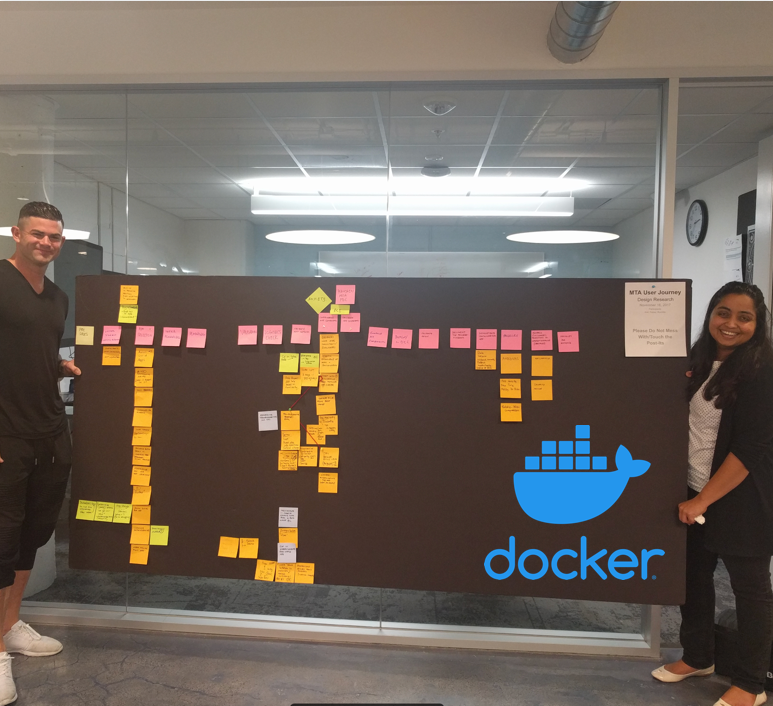
We started by consolidating our personas and making their goals crystal clear. The intent was to have better versions of AS-IS (current) and TO-BE (aspirational) journey maps. To do this, we followed this framework:
Visualized the AS-IS experience in the platform
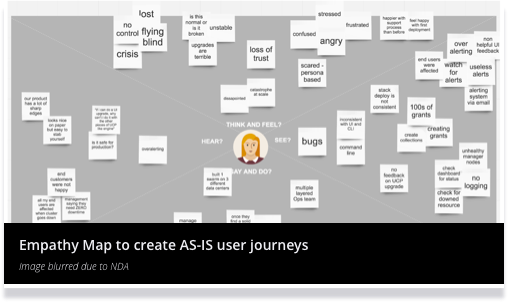
Completed empathy mapping exercises with the stakeholders and field team members
Worked with the PMs to interview top customers and record key themes from these interviews
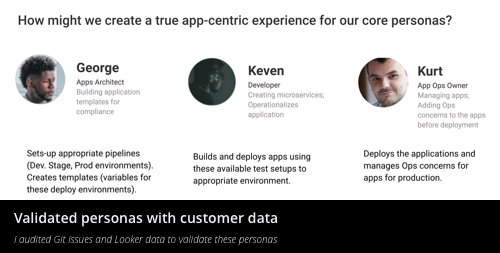
Consolidated existing personas to 3 key personas
Audited existing customer issues from our GitHub and Looker dashboards to validate the personas and their goals
🔥Outcome: Stakeholders felt aligned with the user needs and their pain points. As a team, we decided that solving for cluster federation workflow was the most important pain point for our users. This visualization helped all the stakeholder quickly align to the key initiatives for the company. The team was able to converge on key PRDs (reducing the number from 10 PRDs to 5 key PRDs for the given quarter).
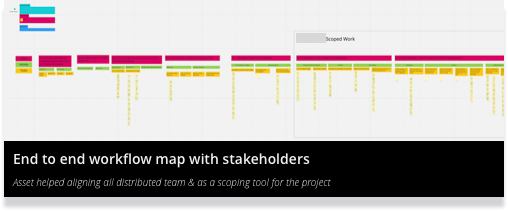
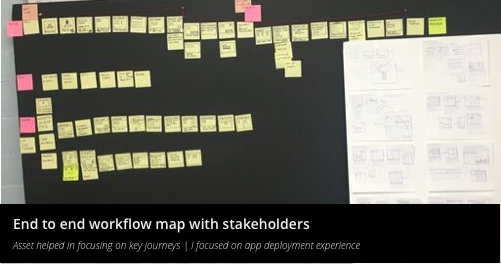
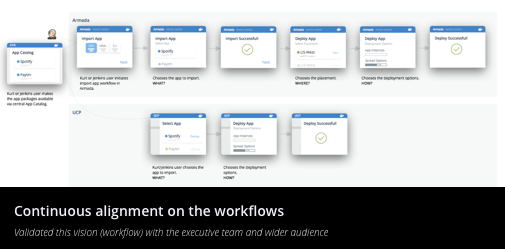
We then worked iteratively with PM, engineering team to whiteboard 50K ft. overview of proposed end to end workflow. From this end to end workflow, we scoped out the key workflows for the cluster federation work. From this scoped work, we distributed our tasks within the design team, and I started focusing on the key workflow of bringing the app into federated cluster view and monitoring these clusters at a high level. I iterated on a higher fidelity version of the information architecture in order to align geographically distributed teams.
🔥Outcome: At the end of this iteration, we had a razor sharp focus on the key workflows needed for the minimum viable product (MVP).
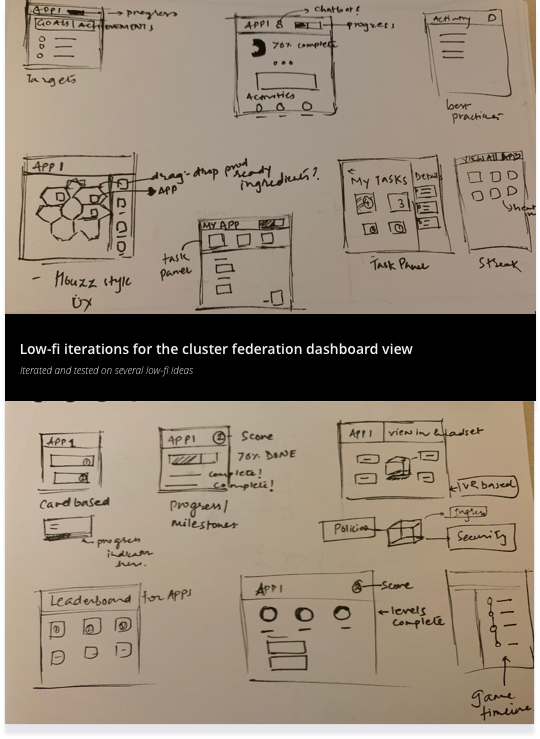
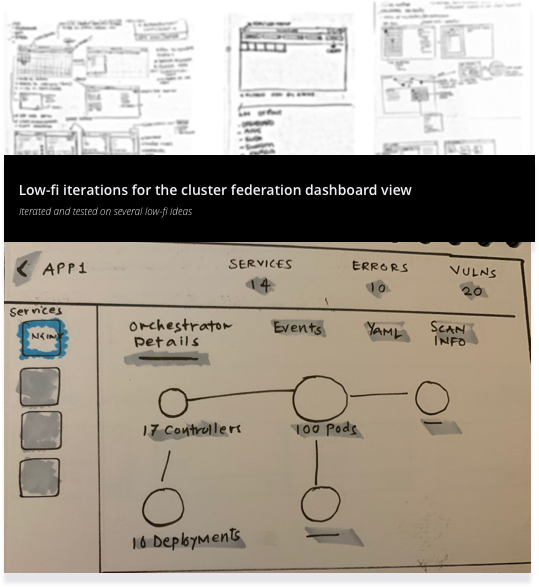
I iterated on several key pieces of the workflow in low-fidelity to get alignment from the stakeholders (tech and PM teams). I tried several mental models to represent different view of the complex workflows involved in monitoring clusters and bringing the app into a federation layer.
🔥Outcome: This exercise helped bring the discussions from 50K feet overview to the nitty-gritties of execution. The key workflows helped us center the discussions to how the MVP might look like after shipping the revamped product/platform.
The next step was to rapidly iterate on multiple solutions for key page- types. This helped in concluding the scoping exercise for key pages and MVP.
We also brought in front-end and back-end teams at this point to do a cost-analysis of the proposed solutions. We started with an audit of the page types and then worked our way through multiple solutions to analyze how we could (a) use piece-meal approach to innovation, (b) what we could salvage from our old UI patterns to build new ones, and (c) bring in APIs into discussion at this stage.
🔥Outcome: By keeping our discussions to page-types and key pages in the product, it helped us center our discussion to scoping mechanics and identifying the cost and timeline factor of the multiple releases.
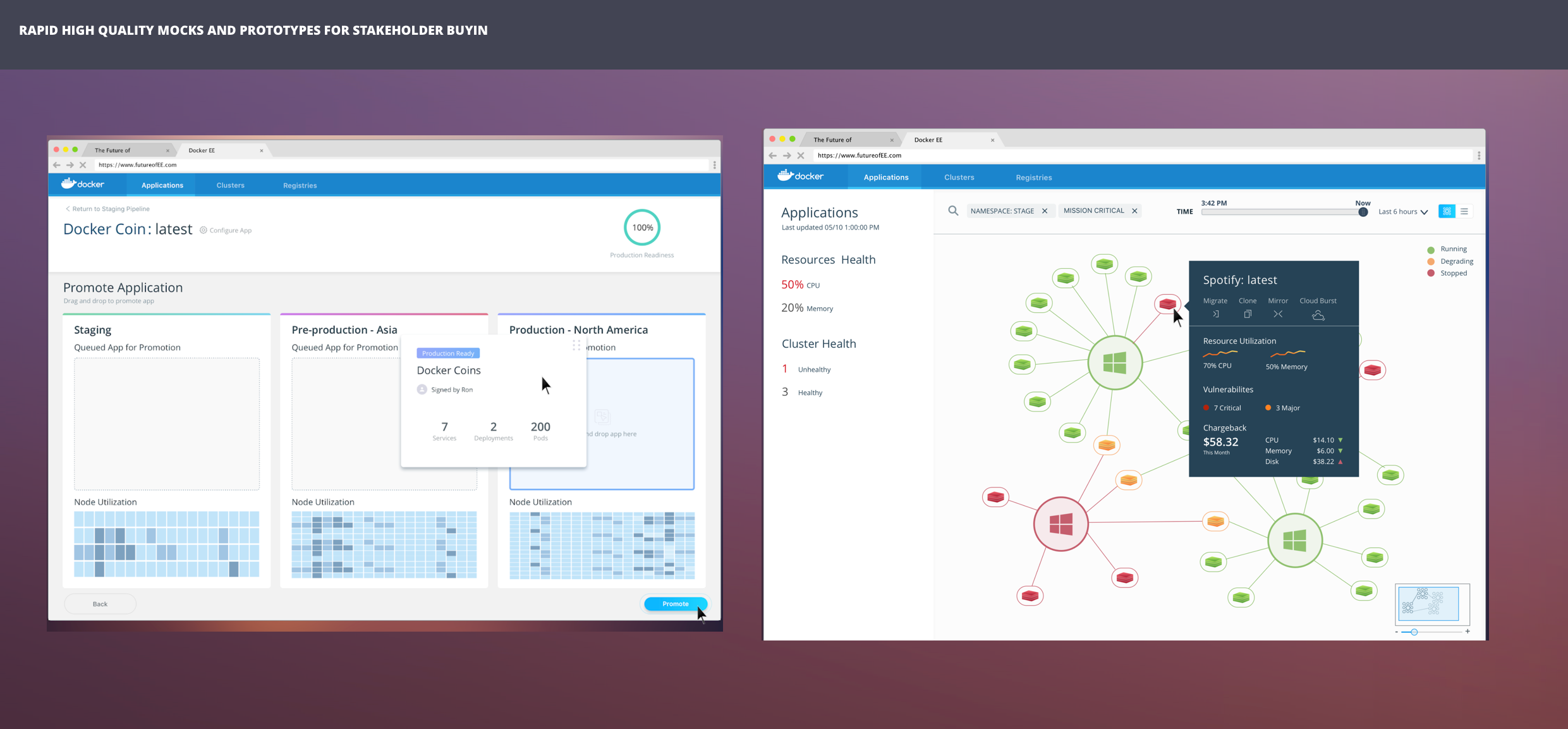
Details coming soon
The aim of this exercise was to bring together all the strong voices at Docker together and help them align on one key strategy. This project was announced at DockerCon 2018 as a one of the new marketplace initiatives and generated great amount of leads (and prebookings) for our sales team.
All of us from the design team had to double down as a project manager to keep things on track. Additionally, weekly retros helped us quickly understand and correct our storytelling fails. One major learning lesson for me as a designer was to be able to understand the impact of visualizing and modeling concepts for the key stakeholders. It also helped me create a disciplined habit of sharing more and sharing often (even the early, ugly sketches).
Path Forward:
Coming soon!